• Letter to the Reader

    Hi Folks

    Let me introduce myself. Most important things first. I am extremely intelligent. I’m a professor, I have a PhD, I wrote a fancy dissertation, I’ve published papers and I’ve read and written many deep and terrible thoughts that should intimidate you. Also I was kicked out of CSU San Diego for failing a class called, “Biology: World of Animals.” It took me close to eight years to finish my Bachelors degree, and without spell check I would have spelled Bachelors wrong. My undergrad GPA was 3.0000000000001, and it took every A I could muster in my last two years to overcome the many D’s on my transcript.

    The point is that people who go to graduate school are just people, they are not all brilliant geniuses who constantly think deep thoughts, they do not all ace every class, and they most certainly don’t know everything. People who go to graduate school are just people who stayed in school even when the school was trying to give them hints to get lost. Sometimes the hints were, “here, have a degree…” and sometimes the hints were an F in a bio class that I’m pretty sure was filled with relatively bright 9th graders. Either way, if you go to grad school, it has less to do with how amazingly smart you are, and much more to do with how amazingly stubborn you can be. Getting into grad school is an exercise in being a stubborn bastard, staying in classes, fighting through discomfort, ignoring negative voices, and staying until they are forced to give you a damn degree.

    In other words, grad school is for you, whoever you are, wherever you are, and whatever your GPA is, you can do it. If you can relate to any of the above, or just feel intimidated, confused or completely lost when thinking about college, graduate school and life after, then this website is for you. Over time this site will fill up with insights, experiences, tricks, tips and information about graduate school, specifically from the perspective of those of us who were the first person in our family to go to college.

    I hope you find something useful here, something inspiring, and maybe something funny. But more than anything, know this, you can go to fucking graduate school. You can get a fucking Masters degree, a PhD, a teaching certificate, a MSW or any other damn grad degree you want, and don’t let anybody tell you that you can’t.

    Prof Kincaid
  • Grad School Book Coming out in May!

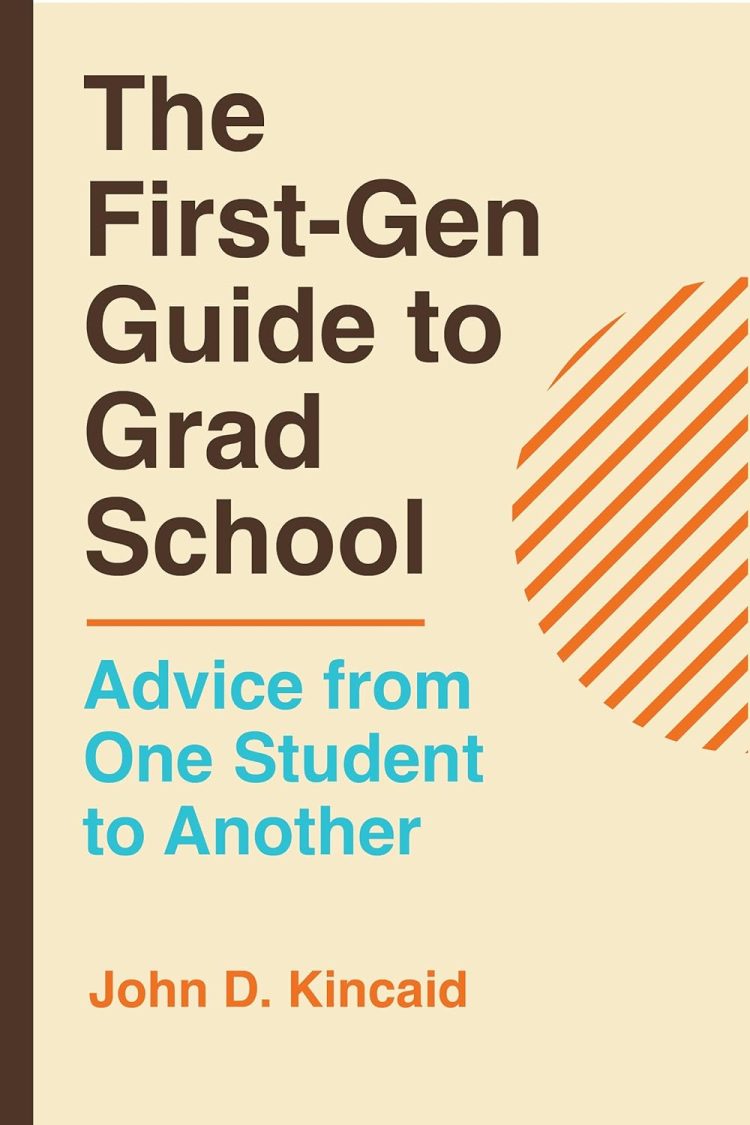
    My book on first-gen college students and grad school will be released in May 2026. You pre-order through Amazon! It will have all of the information that I’ve been covering on this site and a ton more. It’s full of humor, heart and inside information about applying to graduate school as a first-generation college student!

    https://a.co/d/ebfCbpG

  • About CVs

    What is a CV?

    Most programs ask you for a CV as part of your application package. If you are like me you definitely knew what that was before hand and you DID NOT have to furiously google it when you reached that part of your application. It sounds scary but the CV is basically just an academic resume with some key differences. The big picture is that any document that you are submitting as part of your applications is trying to get across two big messages, 1. I can do the academic work in your program and 2. I have the skills to be a good professional in the field you are training me for. Your CV is no different, you need it to get across both of those messages but in a different format from your other materials. Ideally your CV should be a “shortcut” version of material that you discuss in more detail in other parts of your application material, either your essays or your letters of recommendation. In reality, space is limited so the CV may also need to get across new information that isn’t listed anywhere else.

    What to know:

    Two big things to think about when you are putting together your CV. First, the organization of your CV is a key to the reader about what you think are the most important things for them to know about you. Whatever you believe is the most important or impressive aspect of your academic background should be the most prominent part of your CV. If it’s your GPA and your academic record, start with that. If you have a ton of internship of external experience then the document should be organized to highlight that. Since you are applying to an academic institution then your academic record should be a major part of the CV, but what parts of your record your present are up to you. If your overall GPA isn’t much to write home about but your GPA in your major courses, or over your last 60 units is a lot better, show them that! If you did some relevant work in your undergraduate courses that will help you in the grad program, talk about that! How you organize your CV is just as important as what is in your CV. If you have impressive things to share but they are buried then they may never get seen!

    The second major thing is that as first-gen students we are often have a hard time trying to get across the skills that we’ve gained from our undergraduate program. In part we did the same work as anyone else so what’s special about that? Or since you graduated doesn’t that tell the story of what you needed to do to get your degree? Both are wrong. First, whether everyone in your program needed to do the same work or not doesn’t matter, the important thing is that YOU had to do the work, and you did! The program NEEDS TO KNOW exactly what types of work, tasks, analysis, projects etc.. that you did to earn your degree. Maybe other people had to do the same thing, but the people who will be reading your application won’t know that, and if you don’t tell them, they will never know what you accomplished. Secondly, most programs that we will be applying to will not have much if any familiarity with the undergraduate program that you were a part of. You cannot assume that your readers understand what your program required for you to earn a degree, and if you are applying to a program that is in a different discipline than what you are graduating in, then they may not have much understanding at all about why the program you went through is a good fit for the grad program you are applying to. If there are key things you studied in your undergraduate degree (and there ARE!) the you need to talk about them!

    Last things:

    If you look up CV examples on-line, be aware that the people who are most motivated to put their CVs on-line are people who have fancy degrees, impressive sounding awards or cool job titles. For the most part the CV examples that you will find will seem intimidating. Don’t let that scare you off! Everyday people without crazy internships or perfect GPAs get into graduate programs all the time, you don’t need to have a letter of recommendation from a former President to get in, you just need to work on presenting what you DO have in the best possible light.

  • Researching Grad Programs

    Quick tips for researching grad schools

    Now that we are in September a lot of you are researching grad programs and are trying to find out as much as you can about the programs you are interested in applying to. One place to start is to search for the “Office of Graduate Studies” and the university that you are interested in. This will usually be the one stop shop for all of the graduate programs and degrees that a university offers, and you should be able to browse through the different areas.

    Even if you think you know what degree you are interested in it is a good idea to browse these sites and see what else the university might offer. For first-gen students we often don’t have a ton of exposure to the different types of degrees, programs or departments that might be available, so taking some time to check out what is offered, what those programs are, and what would be required is a good way to help you familiarize yourself.

    Second, for any program that you are interested in, you should look through that department for something called a “graduate handbook.” The graduate handbook will spell out exactly what you need to do to earn a degree from that department. You can look through to see what they expect you to do each semester, classes and other requirements. You can also take a look at the courses you will need to take in the Fall and then look at the class schedule for the current Fall semester to get a decent sense of what days and times the course will be. This can be a huge help if you are going to need to plan child care or work around classes.

    Lastly, if you have question or need information the best way to get it is to call the department directly. Most programs will have someone called a “graduate coordinator” who acts as the administrative expert for a particular program. That person, or the chair of the program, should be your point of contact for any questions you have. Calling, or going in person will be your best bet to get a response, emails are easy to overlook and can easily without a response, but calls or visits are much harder to ignore!

    Don’t forget, that while getting information from the website is fine, it’s always possible that the site can have conflicting, confusing, or even wrong information. For many departments we professors or our administrative staff have to update the site ourselves, which can usually be a low priority task, meaning info could be outdated. If something is confusing, ask a person, don’t rely on the website.

  • Letters of Recommendation

    Letters of Recommendation

    Two big things you need to know about letters of recommendation. The first is that you need more than one letter one time, and you letter needs to tell the readers a lot more about you than you might expect from work letters. The second, is that letters of recommendation are not a favor that you earn from your professors, they are part of our job.

    Tackling the first one, when you are applying to graduate school your letters of recommendation are a piece of the picture that you are building for the readers. They need to have a lot more information than what you might typically expect from a letter from a job. The letters, ideally, should contribute to the story you are trying to tell your readers about who you are, what you are capable of, and the skills you bring to the new program.

    As professors, we want to write you a letter that covers all of that, but we need your help. Each year we have hundreds of students so the chances are good that while we want to help you, we don’t remember a ton of detail about what you did in our class or the particulars of your background. What that means is that you need to help give us as much information as possible. That can mean coming to office hours, it can mean giving us a package of your application materials and cluing us into what you want your readers to take away.

    For the second point, I know that student often think of letters of recommendation as gifts from on hight that professors grant to only their most impressive students. I thought the same thing when I was a student. It makes sense, we see that narrative in movies or shows all the time. But the reality is that professors are much more likely to see letters of recommendation as part of their job description, a service that we offer as professors. That doesn’t mean we will automatically say yes to whoever asks, many times professors will want to know more about your goals, your background and what type of letter you need before they agree. But more likely than not your professors are not going to deny you based on your GPA, or your class ranking or the fact that you haven’t won a Nobel prize (yet). As professors, we have had to ask for a hundred letters of recommendation to get where we are, and writing them for you is a small way that we can return the favor.

    What all this means is that the letter process might be a lot less intimidating than you made it out to be in your head. SO GO TALK TO YOUR PROFESSORS!

  • Future Career Exercise

    Many of us as first-gen students have done this passively, as we take the bus into school, as we wait for our food in a restaurant, or in the back of our mind when we’re at the gym. But how often have you been able to really sit for a period of time and think about your future and what you want from it? I have been doing this exercise with my students recently, to help them start to think about what they want from a future career and life in general. Try it out and see what you find.

    Find a quiet space to sit and set a timer for 10 minutes. Close your eyes and try to visualize your future career. Think through a day in your life of a career you would be really happy with. Try to walk through the scenario in your head, your work, your home life. It can be as realistic or as unrealistic as you want. After the five minutes is up take about 20 minutes to journal about the following topics. You can write in short descriptive sentences, entire paragraphs, or even just words that come to mind.

    Things to note in your journal:

    Physical aspects: Setting, Environment, Travel, Indoors, Outdoors, Sitting, Standing, Surroundings, what are you wearing?

    Actions:

    What are you doing? Who are you interacting with? What types of interactions are you having?

    Feelings:

    How does the work you are doing make you feel? How do you interact with the people around you? What types of feelings do you want a career to generate for you? What kind of values are you embodying in your life and work?

    Life:

    What does your work life balance look like? What does your home life look like? How close is your home to your work? How do you get to work each day? Who is in your household?

    After you complete your journal answer the following questions:

    1. What stood out to you about the exercise? Did you notice any patterns in the things you visualized?
    2. Did anything surprise you about the things that came to mind? What was it?
    3. What aspect of your visualization stood out the most to you or had the most impact? The physical aspect of the place you were working, the type of work you were doing, the feelings the work produced?
    4. If you had to make a list, what would you need to accomplish over the next five years to make progress toward this goal?
  • What’s Your Radius?

    You need to think about what your radius is. What I mean is this, there aren’t colleges in every town, let alone two. If you are going to apply to multiple programs then you need to be prepared that this might mean moving, or at the very least, commuting. Knowing this, you need to think about what your radius is, meaning how far can you travel?

    For different people this will be very different. Some of you have families, kids, a job. Your radius may not be bigger than the town you’re in, or places that you can commute in a day. If that’s the case, then don’t worry. Now that you know, find out how many colleges there are in that radius that have graduate programs. One thing that will help, every college that has graduate programs will have an Office of Graduate Studies. On the website for that office will be a list of every graduate program and graduate degree that the university offers. Use this list to take a look, not only at the programs that you know about, but also look for programs that you may never have thought of before. Though you may have a real strong idea of what program you want to go to, keep an open mind, there may be a lot of paths to getting to your final destination (I’ll write more about this later).

    If your radius is so big that you are having trouble narrowing things down, one way to do it might be to think about places you would never want to go, or never want to live. For me that was most of the mid-west and a lot of the South. Nothing against those areas, but I just knew that culturally and geographically they weren’t for me. But that still left a a lot of places that could potentially be really interesting. The other way to look at it is that this may be a once in a lifetime opportunity to go to a place you’ve always wanted to go. New York City, Paris, Berlin, Portland, who knows! A grad program can help you lessen the risks of a big move like that a little bit. The grad school will be your home base, a place to anchor you to a new city, and to give you resources you might not otherwise have if you were just moving on your own.

    Lastly, if your radius is so small that it only includes one university or one program that can work too. The one thing that you will need to prepare yourself for is that you may need to apply multiple times. If you only have one place to apply, then you may need multiple shots to find the right circumstances to get you in. But remember, grad schools are institutions like any other in our society, they yield to persistence and pressure. In other words, if you keep it up, if you have the attitude that you will keep knocking on their door until it breaks down then it will happen. It may not happen right away, but as first generation students, stubbornness and persistence are qualities that we have a ton of. We got ourselves through our undergrad degrees through sheer acts of will and determination. This is no different. You can do it.

  • Office Hours – You need to start going NOW!


    I run a bi-weekly workshop for applying to grad school for first gen students and every semester going to office hours and building relationships with professors is one the tasks that students have the hardest time with.


    I know the feeling. I’m a first-gen student too, and even though I knew I needed letters of recommendation, getting myself to go to office hours was really hard. I felt intimidated, like the professors would be judging me, waiting to test me on some obscure piece of information from our class, or would want me to prove what a genius I was before they would help me. The end result was that unless I was really comfortable with a professor, I just wouldn’t go talk to them outside of class.
    Now that I’m on the other side of the desk, let me tell you a secret, you don’t need to impress us. We almost never get anyone coming to office hours, usually it’s empty. If you show up, that alone is impressive by itself! You don’t need to wow us with your knowledge or your intelligence, you don’t have to have some amazing insight into that week’s readings, we’ll be happy enough if you just opened the book.


    The reality is that office hours are a chance for you to gain access to a person who has had time to make a lot more connections, read more books, gain more insight and generally has more experience than you have. If you are a first-gen student like me that is super valuable. For most of us as first-gen students we don’t have access to people in our close networks of friends and family who have college degrees, have jobs that require college degrees, or have contact with other people who can help make the most of our time in college. If that’s you, then you need to take advantage of your campus community and make build those networks there.


    The other secret of office hours is that we often really WANT to help out! We’ve all been students with hardly any info and fewer connections, now that we have a job and a degree it feels good to be able to give back, and help others in ways that we received help when we were in your shoes. By coming to office hours you are giving us a chance to give back!


    If you’re considering graduate school, then going to office hours, emailing professors, making contact and asking questions is one of the most important steps, so start now!

  • Grad School Apps Are a Numbers Game

    For a lot of us as first-gen students it can be tempting to make your current institution your number one choice for a grad degree. It makes sense, you’ve spent a ton of time and energy finding out the rules of you current institution so it seems natural that this would be your choice for grad school too.

    There is nothing wrong with this logic BUT, grad school applications are a numbers game. Many programs get many more applications each year than they have seats, and in those situation, even students with the most impressive GPAs and CVs are still taking a chance.

    What this means for you is that you need to think about two things. The first is, what is the furthest distance you could conceivably travel to attend a grad program. That can including moving states or cities, or the distance you can commute in a day. Once you have that distance your goal should be to find every grad program within that distance that offers the degree you need and start researching that institution. For now, all of them should be possibilities.

    Ultimately the more of these programs you can apply the more chances you will have at getting into a program. I know it doesn’t feel good to take a big approach like this. Most of us want to laser in on the perfect program and put all of our energy an hope into that application. However, the school you get into is not the end goal, the degree is. Whichever program can offer you a chance at that degree is the best program for you.

    Remember that a grad program is temporary, a few years for most programs. But the career field that it will allow you to access is the bigger goal. The more places you can apply, the more chances you have at getting into a program, getting a degree, and getting into the career you want.

  • How to Choose a Graduate Degree

    Many of us as first gen students made it through our undergraduate degree by focusing on what was directly in front of us and most of the time that was passing classes. This isn’t a bad strategy but it can come back to bite us when we are trying to decide what we want to do next. I’ve worked with a ton of students who are interested in goi g to graduate school, but when I talk to them about their plans, they don’t have much of one beyond going to graduate school.

    Since we’ve been so focused on passing classes most of us probably haven’t had a chance to look much further beyond getting our degree. And now that crossing the graduation stage is more and more a reality it can start to set in that we haven’t had a chance to plan for after.

    A graduate degree is a great tool, so long as we know what it is we are going to use that tool for. Another way to think about it is that if we were building something, we want to start with detailed plans of what we want to build, then decide what tools we need to help us do the job. The way many first generation students go about the process is to get the tool first, then try to figure out what they can build with it. This approach can cause some problems down the road, like mismatches between the degree you earned and the career you want.

    The better approach to is to start the process of deciding what type of career is a good fit for you. That’s easier said than done, since most of us are limited in the careers we’ve encountered that require a college degree or a graduate degree. Because of that we have to get creative, we have to incorporate our networks, including our professors and other people in our lives to help us think through who we are and what type of work will fit us well. I’m going to post a set of exercises you can do to think this process through. Once you’ve done some of these you’ll have some information to take with you into a meeting with a professor or anyone else. You can let them know that you’ve thought about what environments are a good fit for you, what populations you think you’ll work well with, and how you would want your day to look. From there we can help you fill in some possibilities of career paths that might fit those ideas.

    Most of us haven’t had the time to really sit with ourselves and think or plan for our future. If your first generation you’ve been trailblazing a long time, which can mean the task at hand, clearing the way, is the most important thing. But now is the time to plan, to think, to talk about your future. Making time now to do that will help you make sure you get the most out of both your undergraduate and future graduate degree.